
Politics
Nursing Student Self-Deports After 8 Months in ICE Custody | Human Impact Story
Explore the human, legal, and educational impact behind the story.


The story of a nursing student who self-deported after spending eight months in ICE custody is more than just an immigration headline — it is a reflection of how policy, education, and personal resilience intersect in real life. For students pursuing healthcare careers, stability is essential for academic progress. Yet, for some immigrants, even the most structured life plans can be disrupted overnight by detention and legal uncertainty.
This case highlights the emotional, academic, and human consequences of prolonged immigration detention, especially for young individuals working toward essential professions like nursing.
Before her detention, the student was actively pursuing a future in healthcare. She had begun building a path toward becoming a nurse, a profession rooted in service and compassion. Like many nursing students, her daily routine revolved around coursework, clinical preparation, and long-term career planning.
However, her journey took an unexpected turn when she was detained by immigration authorities. Despite having no criminal charges linked to her case, she remained in custody for months while her legal situation remained unresolved. This abrupt shift disrupted her education, delayed her professional development, and placed her future in uncertainty.
For any student, losing eight months of academic momentum can be devastating. For a nursing student, it can mean delayed licensure, interrupted clinical hours, and the risk of abandoning an entire career pathway.
Spending eight months in detention is not just a legal experience — it is a psychological one. Long-term custody often involves restricted movement, limited access to academic resources, and heightened emotional stress. Reports from similar detention cases indicate that detainees frequently experience anxiety and uncertainty about their legal future, academic disruption and loss of study continuity, physical health concerns due to stress and confinement, and emotional isolation from family and support systems.
For a student trained in caregiving, the inability to continue studying or helping others can intensify feelings of helplessness. The environment shifts from one of growth and purpose to one dominated by waiting and legal limbo.
After months of detention, the nursing student made the difficult decision to self-deport — a voluntary departure that allows an individual to leave without a formal deportation order. While technically a choice, self-deportation is often influenced by prolonged detention, emotional exhaustion, and uncertainty about legal outcomes.
From a strategic perspective, voluntary departure can avoid a permanent deportation record, preserve limited future immigration options, end indefinite detention timelines, and provide faster resolution compared to prolonged court proceedings. However, the personal cost is significant, as self-deportation meant leaving behind her education, community, and the life she had been building.
One of the most overlooked aspects of immigration detention is family disruption. Students who are detained often play active roles within their households, whether financially, emotionally, or as caregivers. Her departure reportedly meant separation from close family members and support networks. For many young immigrants, returning to a country they left years earlier can feel disorienting, with cultural readjustment, employment challenges, and emotional displacement becoming immediate realities.
This type of forced transition can reshape not only career plans but identity itself. The global healthcare sector continues to face staffing shortages, especially in nursing, and when a nursing student is removed from the education pipeline, the effects extend beyond the individual. It represents a loss of trained healthcare talent, reduced workforce diversity, delayed contributions to patient care systems, and interrupted professional development in a high-demand field.
In practical terms, each disrupted nursing journey contributes to the widening gap between healthcare demand and workforce supply. This case also raises broader structural questions about immigration enforcement and its impact on students. Many international or undocumented students operate within complex legal frameworks that can change quickly, often facing lengthy detention periods without academic accommodation, limited access to legal resources, educational discontinuity, and mental health implications tied to prolonged uncertainty.
For policymakers and educators, the challenge lies in balancing enforcement with humane considerations for students actively contributing to society through education and professional training. At its core, the story of a nursing student who self-deported after eight months in ICE custody is not just about immigration policy; it is about interrupted ambition, resilience under pressure, and the harsh realities of legal uncertainty. Her experience underscores how fragile academic and career pathways can become when legal status is unresolved, reminding readers that behind policy debates are real individuals whose dreams, education, and futures are directly affected.



Politics
Tanzania’s 2025 Election Crisis: Democracy on Trial as Protests Rock the Nation
Whether Tanzania emerges from this crisis stronger or more divided will depend on how its leaders respond in the coming days.
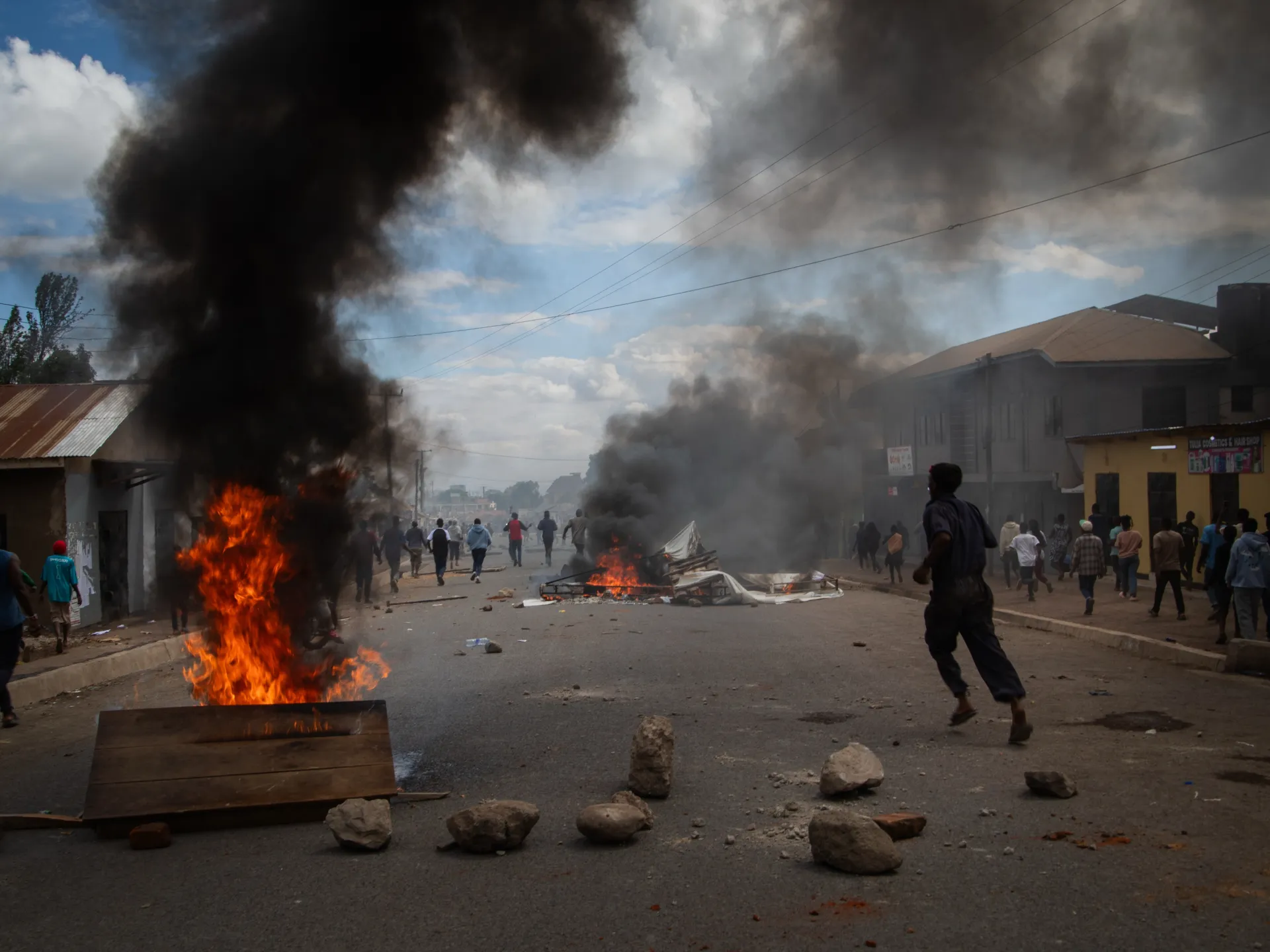
Tanzania, long considered one of East Africa’s most politically stable nations, is now facing a storm of unrest following the October 29, 2025 general election. What began as a routine democratic exercise has turned into a nationwide standoff — a test not only of President Samia Suluhu Hassan’s leadership but also of the country’s democratic foundations.
The Election That Sparked the Storm
President Samia Suluhu Hassan, running under the ruling Chama Cha Mapinduzi (CCM), sought a new mandate after four years in office. While CCM has ruled Tanzania since independence, this year’s election was marred by controversy even before voting began.
Two major opposition leaders — Tundu Lissu (Chadema) and Zitto Kabwe (ACT-Wazalendo) — were disqualified earlier in the year under disputed grounds. Their exclusion left many Tanzanians feeling robbed of genuine choice.
On election day, reports from Dar es Salaam, Arusha, Mwanza, and Zanzibar showed low voter turnout, confusion at polling stations, and accusations of ballot stuffing. Social media was flooded with claims of intimidation, voter bribery, and internet blackouts.
Streets of Unrest: From Peaceful Protest to Chaos
By the morning of October 30, frustration had spilled into the streets. Demonstrations erupted in major towns as opposition supporters rejected early results that appeared to overwhelmingly favor the ruling party.
In Dar es Salaam, burning tires blocked roads, and police used tear gas and live rounds to disperse crowds. In Zanzibar, where memories of past post-election violence remain raw, protesters clashed with security forces, leaving several injured.
Witnesses described a tense scene: “We just wanted our votes to count. Now, people are running for their lives,” said a student in Mwanza.
Opposition groups claim that hundreds have died in the ensuing violence — though official figures remain unconfirmed. Human rights observers have called for an independent investigation, warning that Tanzania’s democracy is “bleeding.”
Silence Online: The Great Internet Shutdown
As the chaos spread, Tanzanians woke up to something eerily familiar — a digital blackout. Internet services slowed to a crawl, social media apps were restricted, and messaging services became unreliable.
The move, seen as an attempt to control the narrative, further angered citizens and attracted global criticism.
Digital rights groups condemned the blackout as “a deliberate assault on free expression at a time the nation needs transparency most.”
The President Speaks
In a national address on Friday morning, President Samia Suluhu urged for calm, calling on Tanzanians to “accept the results peacefully and trust the nation’s institutions.”
However, critics argue that her government’s heavy-handed response — including military deployment in cities — only deepened mistrust.
Opposition leaders, still under tight surveillance, have rejected the results entirely, describing the polls as a “state-orchestrated coronation, not an election.
Regional Ripples: East Africa Watching Closely
Kenya, Uganda, and Rwanda are watching Tanzania’s turmoil with growing concern. As one of the region’s economic anchors, Tanzania’s instability could disrupt trade, tourism, and regional transport routes.
The East African Community (EAC) has called for restraint, while the African Union has requested dialogue between the government and opposition to avert further violence.
Analysts warn that prolonged unrest could tarnish Tanzania’s reputation as a peaceful democracy and discourage international investment — especially in its growing energy and tourism sectors.
🧭 What Happens Next
- Official Results: The National Electoral Commission is expected to release full results soon.
- Opposition Response: Chadema and ACT-Wazalendo are reportedly preparing a joint statement calling for peaceful mass protests.
- International Mediation: Pressure is mounting on the AU and UN to step in before the situation escalates.
- Economic Fallout: Tourism and trade sectors are already bracing for the impact as curfews hit major cities.
Whether Tanzania emerges from this crisis stronger or more divided will depend on how its leaders respond in the coming days.
Final Thoughts
The 2025 Tanzanian election will likely be remembered not for who won, but for what it revealed — a nation at a crossroads between control and democracy.
If dialogue replaces confrontation, Tanzania could still find its path toward healing and reform. But if force continues to answer freedom, then East Africa’s beacon of stability risks dimming into yet another story of lost democratic promise.
Politics
Poll: Virginia governor’s race in dead heat
Quis autem vel eum iure reprehenderit qui in ea voluptate velit esse quam nihil molestiae consequatur, vel illum qui dolorem.

At vero eos et accusamus et iusto odio dignissimos ducimus qui blanditiis praesentium voluptatum deleniti atque corrupti quos dolores et quas molestias excepturi sint occaecati cupiditate non provident, similique sunt in culpa qui officia deserunt mollitia animi, id est laborum et dolorum fuga.
Quis autem vel eum iure reprehenderit qui in ea voluptate velit esse quam nihil molestiae consequatur, vel illum qui dolorem eum fugiat quo voluptas nulla pariatur.
Temporibus autem quibusdam et aut officiis debitis aut rerum necessitatibus saepe eveniet ut et voluptates repudiandae sint et molestiae non recusandae. Itaque earum rerum hic tenetur a sapiente delectus, ut aut reiciendis voluptatibus maiores alias consequatur aut perferendis doloribus asperiores repellat.
Lorem ipsum dolor sit amet, consectetur adipisicing elit, sed do eiusmod tempor incididunt ut labore et dolore magna aliqua. Ut enim ad minim veniam, quis nostrud exercitation ullamco laboris nisi ut aliquip ex ea commodo consequat.
“Duis aute irure dolor in reprehenderit in voluptate velit esse cillum dolore eu fugiat”
Nemo enim ipsam voluptatem quia voluptas sit aspernatur aut odit aut fugit, sed quia consequuntur magni dolores eos qui ratione voluptatem sequi nesciunt.
Et harum quidem rerum facilis est et expedita distinctio. Nam libero tempore, cum soluta nobis est eligendi optio cumque nihil impedit quo minus id quod maxime placeat facere possimus, omnis voluptas assumenda est, omnis dolor repellendus.
Nulla pariatur. Excepteur sint occaecat cupidatat non proident, sunt in culpa qui officia deserunt mollit anim id est laborum.
Sed ut perspiciatis unde omnis iste natus error sit voluptatem accusantium doloremque laudantium, totam rem aperiam, eaque ipsa quae ab illo inventore veritatis et quasi architecto beatae vitae dicta sunt explicabo.
Neque porro quisquam est, qui dolorem ipsum quia dolor sit amet, consectetur, adipisci velit, sed quia non numquam eius modi tempora incidunt ut labore et dolore magnam aliquam quaerat voluptatem. Ut enim ad minima veniam, quis nostrum exercitationem ullam corporis suscipit laboriosam, nisi ut aliquid ex ea commodi consequatur.
Politics
House panel to consider bill to revamp DHS cyber team
Nemo enim ipsam voluptatem quia voluptas sit aspernatur aut odit aut fugit, sed quia consequuntur magni dolores eos qui.
Lorem ipsum dolor sit amet, consectetur adipisicing elit, sed do eiusmod tempor incididunt ut labore et dolore magna aliqua. Ut enim ad minim veniam, quis nostrud exercitation ullamco laboris nisi ut aliquip ex ea commodo consequat.
Nemo enim ipsam voluptatem quia voluptas sit aspernatur aut odit aut fugit, sed quia consequuntur magni dolores eos qui ratione voluptatem sequi nesciunt.
Et harum quidem rerum facilis est et expedita distinctio. Nam libero tempore, cum soluta nobis est eligendi optio cumque nihil impedit quo minus id quod maxime placeat facere possimus, omnis voluptas assumenda est, omnis dolor repellendus.
Nulla pariatur. Excepteur sint occaecat cupidatat non proident, sunt in culpa qui officia deserunt mollit anim id est laborum.
Sed ut perspiciatis unde omnis iste natus error sit voluptatem accusantium doloremque laudantium, totam rem aperiam, eaque ipsa quae ab illo inventore veritatis et quasi architecto beatae vitae dicta sunt explicabo.
Neque porro quisquam est, qui dolorem ipsum quia dolor sit amet, consectetur, adipisci velit, sed quia non numquam eius modi tempora incidunt ut labore et dolore magnam aliquam quaerat voluptatem. Ut enim ad minima veniam, quis nostrum exercitationem ullam corporis suscipit laboriosam, nisi ut aliquid ex ea commodi consequatur.
At vero eos et accusamus et iusto odio dignissimos ducimus qui blanditiis praesentium voluptatum deleniti atque corrupti quos dolores et quas molestias excepturi sint occaecati cupiditate non provident, similique sunt in culpa qui officia deserunt mollitia animi, id est laborum et dolorum fuga.
Quis autem vel eum iure reprehenderit qui in ea voluptate velit esse quam nihil molestiae consequatur, vel illum qui dolorem eum fugiat quo voluptas nulla pariatur.
“Duis aute irure dolor in reprehenderit in voluptate velit esse cillum dolore eu fugiat”
Temporibus autem quibusdam et aut officiis debitis aut rerum necessitatibus saepe eveniet ut et voluptates repudiandae sint et molestiae non recusandae. Itaque earum rerum hic tenetur a sapiente delectus, ut aut reiciendis voluptatibus maiores alias consequatur aut perferendis doloribus asperiores repellat.
-

 Business11 months ago
Top 5 Profitable Side Hustles for University Students in Kenya
-

 Tech12 months ago
Best Free Coding Resources for Students to Learn Programming
-

 Business11 months ago
Best Online Businesses for Nigerian Students to Make Money in 2024
-

 Tech12 months ago
Top 10 Must-Have Tech Gadgets for Students in 2025
-

 Tech12 months ago
How African Students Can Leverage Technology to Secure Online Jobs
-

 Tech9 years ago
University of Nairobi Faces Financial and Governance Challenges: A Call for Urgent Reforms
-

 Business4 months ago
This is how you dress for a job interview, and land an offer
-

 Business8 months ago
The 9 worst mistakes you can ever make at work