
Business
15 Habits that could be hurting your business relationships
Learn 15 common behaviors that damage trust, communication, and long-term success, plus how to fix each one.


Introduction
Every successful business — from startups to global corporations — runs on relationships. Your ability to build trust, communicate clearly, and follow through determines whether clients return, partners collaborate, or employees stay loyal.
Yet many professionals unknowingly sabotage these relationships through subtle, repeated habits.
Here are 15 habits that could be hurting your business relationships — and how to stop them before they damage your reputation or bottom line.
1. Overpromising and Underdelivering
Trying to impress a client by saying “yes” to everything can backfire. Missing commitments erodes trust fast.
Fix it: Set realistic expectations from the start and exceed them when you can. Reliability is more powerful than hype.
2. Ignoring Follow-Ups
Failing to reply or forgetting to check back after meetings sends a message: you’re not important.
Fix it: Use reminders or CRM tools like HubSpot or Trello. A simple “Just following up as promised” email strengthens your credibility.
3. Talking More Than Listening
Clients and partners want to feel heard — not lectured. Over-talking makes you appear self-focused.
Fix it: Use the 70/30 rule: listen 70% of the time, talk 30%. Ask clarifying questions to show genuine engagement.
4. Taking Credit — But Not Sharing It
No one likes a glory thief. Taking full credit for teamwork kills morale and trust.
Fix it: Acknowledge others publicly. “This wouldn’t have happened without my team” earns long-term respect.
5. Avoiding Difficult Conversations
Dodging issues (like payment disputes or performance concerns) lets tension build.
Fix it: Address conflict early, calmly, and privately. Silence rarely solves problems — it multiplies them.
6. Being Unresponsive or Hard to Reach
Inconsistent communication frustrates clients and colleagues.
Fix it: Set clear availability windows, respond within 24 hours, and use autoresponders if you’ll be unavailable.
7. Poor Time Management
Constantly showing up late to meetings or delivering work at the last minute signals disrespect for others’ time.
Fix it: Use scheduling tools, plan buffers, and always arrive 5–10 minutes early — both virtually and in-person.
8. Lack of Empathy
Business is human. Treating interactions as purely transactional weakens emotional connection.
Fix it: Learn clients’ goals, celebrate their wins, and show care during tough times. Empathy fosters loyalty.
9. Neglecting Personal Branding
How you present yourself — online and offline — shapes perception. Sloppy emails or outdated profiles reflect poorly on your professionalism.
Fix it: Keep your LinkedIn, website, and tone consistent and polished.
10. Not Keeping Confidentiality
Sharing private client or internal information destroys trust instantly.
Fix it: Respect NDAs, avoid discussing sensitive details casually, and store data securely.
11. Being Transactional Instead of Relational
Focusing only on short-term sales or deals ignores long-term partnerships.
Fix it: Nurture relationships — check in without needing anything. Small gestures compound over time.
12. Not Giving Credit or Feedback
Silence after someone helps or delivers great work is demotivating.
Fix it: Thank people specifically and publicly. A 30-second compliment can build years of goodwill.
13. Reacting Emotionally or Unprofessionally
Angry emails, sarcasm, or emotional outbursts can permanently damage trust.
Fix it: Pause before responding, especially in conflict. Write drafts, cool off, then reply professionally.
14. Failing to Adapt to Communication Styles
Some clients prefer calls, others emails or WhatsApp. Using only your style frustrates them.
Fix it: Mirror your partner’s preferred method and tone. Flexibility signals respect.
15. Ignoring Relationship Maintenance
Relationships need nurturing — not just when you need something.
Fix it: Send a thank-you message after projects, check in quarterly, or share helpful resources. Stay top-of-mind.
Conclusion
Your reputation is your most valuable currency.
Even one bad habit — like missed calls, broken promises, or lack of empathy — can chip away at years of trust.
By becoming aware of these 15 behaviors and replacing them with intentional, respectful communication, you’ll build relationships that not only last — but grow your business.
Strong relationships aren’t built overnight — they’re built habit by habit.



Business
How to understand your employees and keep them happy
Happy employees build thriving businesses. So listen, care, and lead with heart — because success starts with understanding.

Your employees aren’t just workers — they’re the heartbeat of your business. When people feel understood, valued, and supported, they give their best. But when leaders fail to understand their teams, even the most talented staff lose motivation.
Understanding your employees is not guesswork — it’s a skill. Here’s how to truly understand your employees and keep them happy, loyal, and productive.
1. Listen — Really Listen
Many managers think they listen, but few actually do. Employees notice when you’re just nodding versus genuinely hearing them.
How to apply:
- Schedule regular one-on-one check-ins.
- Ask open-ended questions like, “What’s been challenging for you this week?”
- Repeat key points back to show you understood.
- Avoid interrupting — silence invites honesty.
🗝️ Active listening is the foundation of understanding.
2. Observe Behavior, Not Just Words
Sometimes employees won’t say they’re stressed, but their actions reveal it — missed deadlines, low energy, or withdrawal.
How to apply:
- Notice changes in tone, performance, or social participation.
- Approach with empathy: “I’ve noticed you seem quieter lately — everything okay?”
- Don’t assume. Ask, then listen.
👀 Actions often speak louder than status reports.
3. Personalize Motivation
Not everyone is motivated by the same thing. Some love public praise; others prefer private appreciation or career growth.
How to apply:
- Ask what drives each person.
- Track their motivators — use short surveys or informal talks.
- Tailor recognition: “You did great on this client project — would you prefer I highlight it in our team meeting or share privately?”
🎯 Personalized motivation leads to lasting engagement.
4. Communicate Openly and Frequently
Unclear communication breeds anxiety. Transparency builds trust.
How to apply:
- Share company updates regularly.
- Explain why decisions are made, not just what they are.
- Encourage two-way communication — feedback should flow both up and down.
💬 Employees can’t feel understood if they don’t feel informed.
5. Recognize and Celebrate Contributions
Recognition isn’t about grand gestures — it’s about consistent acknowledgment.
How to apply:
- Say thank you — immediately and specifically.
- Celebrate small wins in team meetings or via company channels.
- Use non-monetary rewards too (flex time, learning opportunities, lunch treat).
🌟 Recognition is the cheapest form of motivation — and the most powerful.
6. Invest in Growth and Learning
Employees are happiest when they see a path forward. If they feel stuck, they disengage.
How to apply:
- Offer training programs, mentorships, or online courses.
- Help employees create personal growth plans.
- Promote from within when possible.
📈 Growth fuels loyalty.
7. Respect Work-Life Balance
Burnout doesn’t just kill productivity — it kills trust. Respecting personal time shows that you value your team as humans, not just resources.
How to apply:
- Avoid after-hours emails unless urgent.
- Offer flexible schedules or remote options if possible.
- Encourage vacations — and ensure employees actually take them.
🕒 Balanced employees are better performers.
8. Encourage Honest Feedback (and Act on It)
If employees can’t speak up, issues fester underground.
How to apply:
- Create safe feedback channels — anonymous surveys, open-door policies.
- Respond to suggestions — even if you can’t implement them all.
- Show appreciation for honesty, not punishment.
📣 Listening without acting breeds frustration. Acting builds trust.
9. Show Empathy During Hard Times
Life happens — illness, loss, personal struggles. How you respond defines your leadership.
How to apply:
- Be flexible with workloads when someone’s struggling.
- Offer mental health support or counseling resources.
- Check in personally — a small gesture goes a long way.
❤️ Empathy is remembered long after the paycheck is spent.
10. Create a Culture of Trust
Micromanagement suffocates creativity. Empowerment inspires confidence.
How to apply:
- Delegate authority, not just tasks.
- Trust employees to make decisions.
- Admit your own mistakes — it humanizes you.
🤝 Trust is the ultimate motivator.
11. Build Team Connections
Strong peer relationships boost morale more than you might think.
How to apply:
- Host team lunches, retreats, or virtual hangouts.
- Encourage collaboration across departments.
- Create mentorship pairs for learning and support.
👥 Connection creates belonging — belonging drives performance.
12. Pay Fairly and Transparently
No amount of “thank-yous” can fix underpayment. Compensation shows how much you really value someone’s work.
How to apply:
- Benchmark salaries with market data.
- Be open about pay ranges and raise policies.
- Include benefits like health, training, or flexible time — they matter too.
💰 Fair pay = lasting loyalty.
13. Give Autonomy
People perform better when they feel ownership of their work.
How to apply:
- Let employees choose how to approach projects.
- Encourage creativity and risk-taking.
- Evaluate outcomes, not micromanage methods.
🧩 Autonomy breeds accountability.
14. Keep Promises
Every unkept promise, no matter how small, chips away at trust.
How to apply:
- Only promise what you can deliver.
- Follow up when you say you will.
- If you can’t, explain why and when you’ll revisit it.
🕊️ Integrity keeps relationships strong.
15. Lead by Example
Your behavior sets the tone for the entire workplace.
How to apply:
- Model transparency, humility, and consistency.
- Admit your mistakes — it builds respect.
- Celebrate success publicly, take responsibility privately.
🏆 The best way to inspire happy employees is to be the kind of leader they admire.
Conclusion
Understanding your employees isn’t about surveys or HR checklists — it’s about empathy, communication, and consistency.
When employees feel understood and supported, they don’t just work for you — they believe in you.
Happy employees build thriving businesses. So listen, care, and lead with heart — because success starts with understanding.
Business
This is how you dress for a job interview, and land an offer
When you dress appropriately for the role and company, you reduce distractions, project professionalism, and allow your skills and personality to shine.

Introduction
When you walk into an interview, you bring more than your resume or your skills — you bring your appearance. Your outfit communicates professionalism, respect, attention to detail and “fit” for the role. According to several career-guides, your clothing choice is a visible cue that employers use (perhaps subconsciously) to assess how you’ll represent their brand. Recruiting in Motion+2myUSF+2
If you want to land the offer, dressing appropriately is not optional — it’s part of the job-application strategy.
1. Research the Company & Role
Before you even pick your outfit, you need to ask: What does this company expect? What does this role require?
- Visit the company’s website or “Meet Our Team” page. Are employees in suits, or in smart casual? Purdue Global+1
- If you can’t find clear cues, ask during scheduling: “Could you tell me the expected dress code for the office?” That’s legitimate. Coursera+1
- A good rule of thumb: dress one level above the company’s regular attire. If the staff usually wear jeans and shirts, you might choose dress pants + a blazer to show you take the interview seriously. WorkPac+1
2. Match Your Outfit to the Formality
Once you’ve gauged the dress code, choose one of these tiers:
Business Professional
- Dark suit (navy, charcoal, black) for men; skirt-suit or pantsuit for women. The Muse+1
- Button-down shirt or blouse, minimal patterns, classic tie (for men), polished shoes. Purdue Global+1
- Ideal for interviews in finance, law, corporate management, or roles where client-facing and formal presence is key.
Business Casual
- A notch down in formality: dress pants or chinos, a smart shirt/blouse, optional blazer, closed-toe shoes. Indeed+1
- Suitable for many modern offices, tech companies, creative industries where suits may appear too formal.
Smart Casual / Casual (With Caution)
- If the company is very relaxed (start-up, creative studio), you may wear neat dark jeans (no rips), a collared shirt/blouse, and clean shoes. But even then: don’t underdress. Many guides warn: it’s safer to be slightly overdressed than underdressed. honorsociety.org+1
3. Pay Attention to Fit, Condition & Details
- Clothes must be clean, well-fitting, pressed/ironed, free of stains, pet hair, tears. Indeed+1
- Choose practical fabrics (not too shiny or distracting) and make sure you’re comfortable — discomfort shows. Purdue Global
- Colors: neutral dominant colors like navy, charcoal, black, grey work well. You can add a subtle color accent (tie, scarf) if appropriate. thunderbird.asu.edu
- Accessories & grooming: keep jewelry and prints minimal, shoes polished, nails trimmed, hair neat. A strong first impression is built up from all these micro details. Gardner-Webb University
4. The Day Before & On The Day
- Lay out your outfit the night before: ensures you’re ready and reduces stress. Indeed
- Plan for weather: rainy day? Bring an umbrella and avoid slipping shoes. Hot day? Choose breathable fabrics. Purdue Global
- For virtual interviews: dress the same way as you would in-person — head-to-toe. Even though only upper body may show, you’ll feel more professional if fully dressed. Purdue Global
5. What to Avoid
- Avoid overly casual items: t-shirts with large logos, shorts, flip-flops, athletic shoes. Coursera+1
- Avoid distracting patterns, loud prints, bright neon colors unless you’re sure the company culture welcomes it. The Muse
- Don’t wear excessive perfume/cologne — scent can distract or trigger sensitivities. thunderbird.asu.edu
- Avoid ill-fitting clothes: baggy, too tight, too short skirts/shorts — these can undermine your credibility. Reddit
6. Why Dressing Well Matters
- First impressions: your outfit is a non-verbal cue that forms impressions in minutes. It signals professionalism, respect and preparedness. Recruiting in Motion+1
- Fit with culture: By dressing appropriately, you show you can “fit in” to the company’s environment — which hiring managers value. honorsociety.org
- Confidence boost: When you feel you look good, you are more likely to walk in confident — and confidence shows in body language and tone. Recruiting in Motion
7. Tailor Your Outfit for Local Context (Kenya / Nairobi)
Given you’re in Nairobi (or applying globally but based in Kenya), consider local factors:
- Climate: Kenya is warm in many locations — opt for breathable fabrics (light wool blends, cotton) rather than heavy wool suits.
- Cultural / regional norms: In a Nairobi corporate environment you might see western-style suits; but in more relaxed companies you may align with smart casual—still, aim to be professionally dressed.
- Shoes & accessories: Ensure shoes are clean (dust etc can show more in dry/humid climates), keep minimalism in accessories.
- Grooming: Being well-groomed (hair, nails, shoes) matters globally and especially in competitive markets.
8. Final Checklist Before You Walk In
- Outfit picked, ironed/pressed, shoes cleaned
- Clothes fit well and feel comfortable
- Colour palette neutral with no major distractions
- No visible stains/tears/pet hair
- Accessories minimal, grooming done
- Background (if virtual) is tidy and professional
- You feel confident and ready
Conclusion
Your interview outfit is more than just clothes — it’s a component of your overall presentation. When you dress appropriately for the role and company, you reduce distractions, project professionalism, and allow your skills and personality to shine. You increase your chances of landing the offer.
Remember: hope for the best, prepare for success — right down to what you wear.
Business
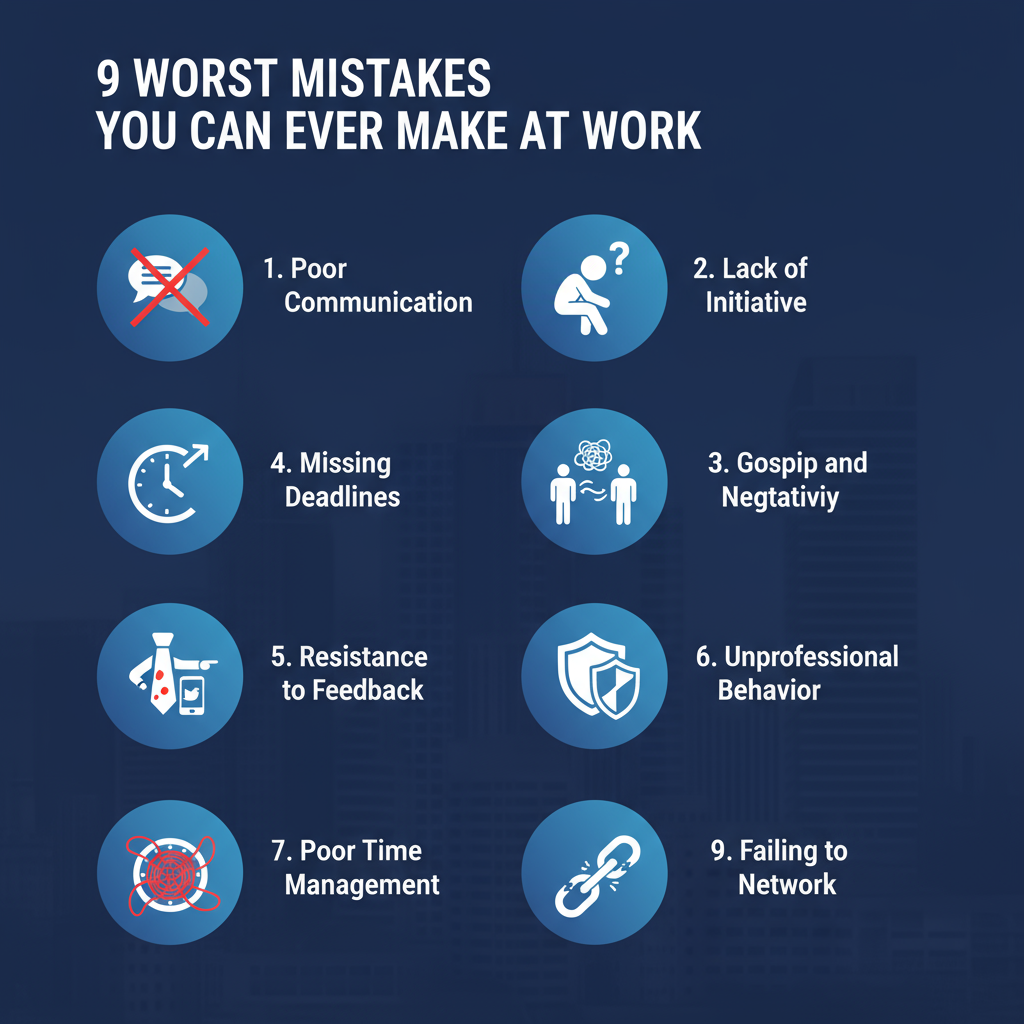
The 9 worst mistakes you can ever make at work
Mistakes are inevitable — but repeated mistakes can stall your career. By recognizing and avoiding these nine, you’ll position yourself as dependable, self-aware, and growth-minded.
Introduction
Even the most talented employees can make career-damaging mistakes — often without realizing it. Whether you’re new to the workforce or a seasoned professional, the smallest slip can affect how your boss, colleagues, and clients perceive you.
This guide lists the nine worst mistakes you can ever make at work, why they matter, and how to avoid them — so you can protect your reputation and accelerate your career growth.
1. Ignoring Deadlines and Deliverables
Few things frustrate managers more than missed deadlines. It signals disorganization and unreliability.
Fix it:
- Use digital planners or task apps like Notion, Google Calendar, or Trello.
- Communicate early if you can’t meet a deadline — don’t wait until it’s too late.
- Break projects into smaller milestones to stay on track.
📎 Tip: Always under-promise and over-deliver — it builds trust.
2. Gossiping or Engaging in Office Drama
Gossip feels harmless, but it quickly erodes trust and professionalism. It can even backfire if it reaches the wrong ears.
Fix it:
- Avoid negative talk about colleagues or management.
- Redirect conversations toward work-related or positive topics.
- If someone tries to gossip with you, excuse yourself politely or change the subject.
🧭 Professionalism is your silent brand — protect it.
3. Poor Communication (Especially via Email or Chat)
In today’s hybrid offices, written communication defines your professionalism. Typos, vague messages, or harsh tone can cause confusion or conflict.
Fix it:
- Reread before hitting send.
- Use clear, polite, and concise language.
- Don’t send messages when angry — wait 10 minutes.
- Choose the right channel: email for formal issues, chat for quick updates.
💡 Good communicators climb faster — clarity is credibility.
4. Not Taking Ownership of Mistakes
Everyone makes errors, but denying or deflecting blame damages trust faster than the mistake itself.
Fix it:
- Admit your error early and clearly.
- Offer a solution or plan to prevent recurrence.
- Follow up to show you’ve learned from it.
🎯 Accountability turns mistakes into leadership moments.
5. Being Negative or Resistant to Change
Companies evolve constantly. Being the “that’s not my job” person signals inflexibility.
Fix it:
- Approach new challenges with curiosity, not fear.
- Focus on solutions, not problems.
- Volunteer for projects that stretch your skills.
🌱 Adaptability is the new job security.
6. Ignoring Company Culture and Etiquette
Every workplace has its unwritten rules: communication style, dress code, timing, tone. Violating them can alienate you from the team.
Fix it:
- Observe how respected employees behave.
- Mirror professionalism — punctuality, tone, collaboration.
- Ask HR or your supervisor for guidance if unsure.
👕 When in doubt, be respectful, be neutral, and be on time.
7. Not Managing Your Online Image
Your digital presence matters — even if you think your boss doesn’t see it. Employers often check social profiles before promotions.
Fix it:
- Keep LinkedIn updated and professional.
- Avoid posting offensive or controversial content publicly.
- Separate personal and professional accounts if needed.
💻 Your online footprint is part of your resume.
8. Overworking Without Boundaries
Hard work is admired — burnout isn’t. Constantly working late or skipping breaks leads to exhaustion and errors.
Fix it:
- Set realistic boundaries and communicate them.
- Take breaks to recharge productivity.
- Learn to say “no” diplomatically when overloaded.
⚖️ Work smart, not endlessly.
9. Failing to Build Relationships
Career success is rarely solo. Ignoring networking or collaboration limits your visibility and growth.
Fix it:
- Support colleagues’ ideas and celebrate their wins.
- Connect cross-departmentally.
- Attend company events and stay approachable.
🤝 People promote people they like — not just those who perform.
Conclusion
Mistakes are inevitable — but repeated mistakes can stall your career. By recognizing and avoiding these nine, you’ll position yourself as dependable, self-aware, and growth-minded.
The best employees aren’t perfect — they’re proactive.
Start today: fix one habit, improve your communication, and take ownership. Your next promotion could depend on it.
-

 Business11 months ago
Top 5 Profitable Side Hustles for University Students in Kenya
-

 Tech12 months ago
Best Free Coding Resources for Students to Learn Programming
-

 Business11 months ago
Best Online Businesses for Nigerian Students to Make Money in 2024
-

 Tech12 months ago
Top 10 Must-Have Tech Gadgets for Students in 2025
-

 Tech12 months ago
How African Students Can Leverage Technology to Secure Online Jobs
-

 Tech9 years ago
University of Nairobi Faces Financial and Governance Challenges: A Call for Urgent Reforms
-

 Business4 months ago
This is how you dress for a job interview, and land an offer
-

 Business8 months ago
The 9 worst mistakes you can ever make at work